
The word “skill” was never a legal shield
For years the pitch around Pennsylvania skill games was simple: add a nudge, a stop button, a memory puzzle, and the machine stops being a slot machine. The Pennsylvania Supreme Court disagreed. In its June ruling, the court held that an element of skill inside a game that is otherwise driven by chance does not lift the device out of the Pennsylvania Gaming Act. If it looks like a slot machine, pays like a slot machine and is settled mostly by chance, it is a slot machine, and slot machines belong only inside facilities licensed by the Pennsylvania Gaming Control Board.
That ruling came with a 120-day stay. The stay expires October 13, 2026, and law enforcement action is allowed starting October 14. After that, roughly 70,000 terminals sitting in convenience stores, bars, social clubs and grocery chains across the commonwealth are not in a gray zone any more. They are unlicensed slot machines in unlicensed locations.
What the warnings actually demand
Two separate signals landed in quick succession. The Pennsylvania State Police reminded businesses that the machines must be physically removed by the deadline, not merely unplugged or switched off. Attorney General Dave Sunday then repeated the point on September 29, and added teeth: businesses that still have devices on site after the deadline risk law enforcement action.
His own framing was closer to a plea than a threat. “We do not want to see searches and seizures at storefronts or bar, social club, and restaurant establishments,” Sunday said. “We would much rather business owners and social clubs comply with the law and take steps to get these illegal devices out of their places of business.” He went on: “Collaborating with our law enforcement partners, my office will act in accordance with the law, which prohibits these machines outside of licensed gaming facilities.”
The published guidance spells out what action means. It may include seizing and forfeiting the machines, the associated equipment and the money tied to their operation, and filing criminal charges where deemed appropriate. Distributors, vendors and manufacturers who refuse to pull their machines out of host venues were put on notice about potential criminal charges too, which matters, because the terminal in the corner of a store is usually not owned by the store.
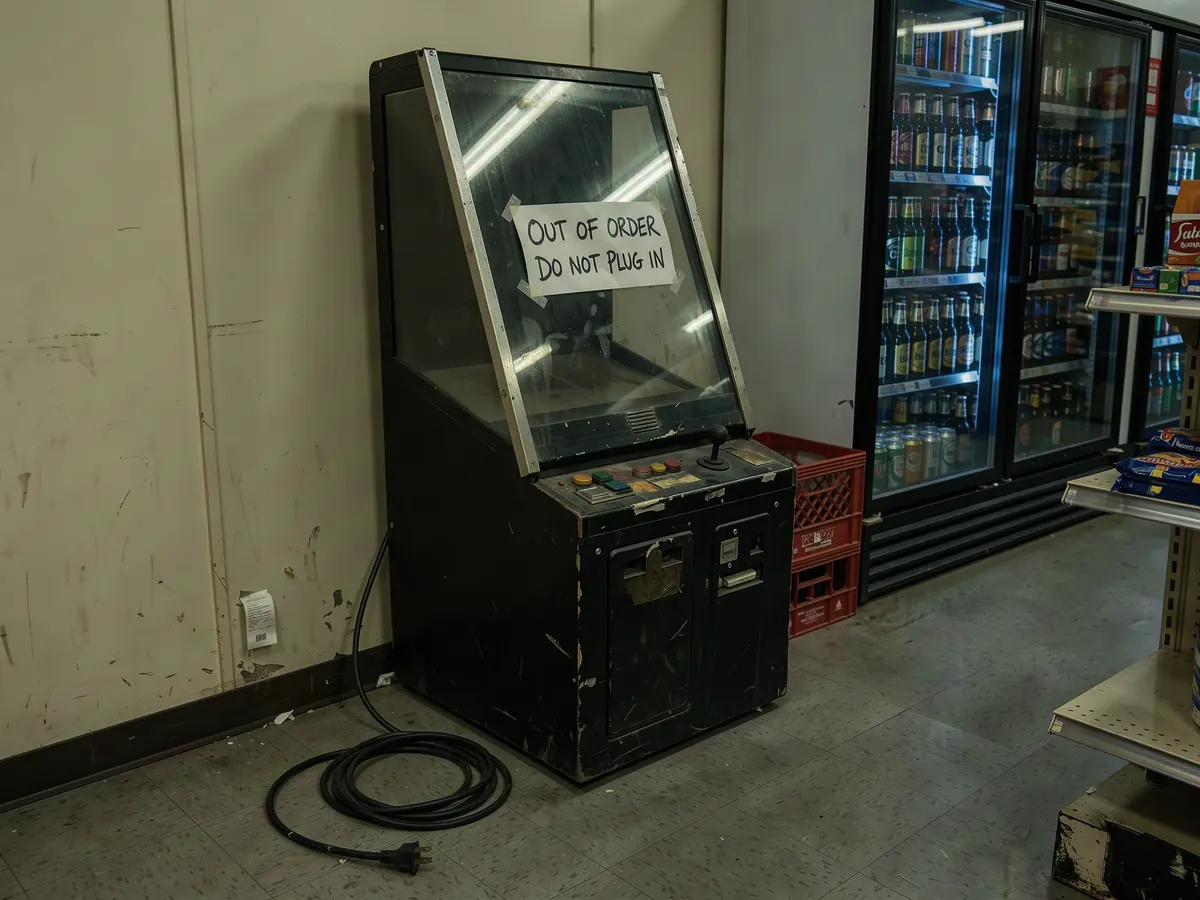
The practical difference between “off” and “gone” is the part most likely to catch people out. A dark screen is still a device on the premises. The deadline is about removal.
How 70,000 machines ended up next to the lottery terminal
The cause of this mess is twenty years of unresolved definition. Pennsylvania legalized and heavily taxed casino slots, then left a category of machines that claimed to sit outside that definition to spread through the retail economy largely untested. Nobody licensed them as gambling devices. Nobody audited their payout percentages the way the Gaming Control Board audits a casino floor. They simply multiplied, mostly under the Pennsylvania Skill brand associated with Pace-O-Matic and Miele Manufacturing.
And they made money for the venues. Small operators credit skill-game revenue with carrying them through the COVID period and the inflation that followed, covering payroll and rent when foot traffic did not. That is the uncomfortable centre of this story. The machines were plainly unregulated gaming machines, and they were also a line item that kept some family businesses open. Removal is not an abstraction for those owners; it is a hole in the monthly numbers.
Skill games vs slot machines, as the law now sees them
The comparison that matters is not how the games play but how they are governed.
| Feature | Licensed casino slots | Skill games (pre-ruling) |
|---|---|---|
| Regulator | Pennsylvania Gaming Control Board | None |
| Where they may operate | PGCB-licensed gaming facilities | Convenience stores, bars, social clubs, grocery stores |
| Tax on slot revenue | 55% | No gaming tax; industry has proposed a far lower rate |
| Legal status after the stay expires | Legal where licensed | Unlicensed slot machines |
That 55% figure explains most of the politics. The skill-game industry has asked to be taxed and regulated, which sounds cooperative until you reach the rate it wants, which is well below what casinos pay on slot revenue. Casino operators, who bought licences and pay that rate, are not enthusiastic about a parallel network of machines with cheaper terms and no licence fee.
Why Harrisburg did not fix it in time
Lawmakers on both sides of the aisle have said they are open to a legal framework for skill games. Saying so is not the same as passing a bill. With the deadline weeks away, no skill-game legislation had cleared a committee in the General Assembly, which means a statutory rescue before the court’s ruling takes effect is a long shot. Tax rate, licence structure, machine caps per venue, who gets the revenue: every one of those is a fight, and none of them was settled.
So the sequence is backwards from how regulation usually arrives. Enforcement comes first; the framework, if it comes, arrives later and has to deal with a market that has already been dismantled.
What compliance looks like for a venue owner
If you host machines, the useful questions are narrow and immediate.
- Get the removal in writing. Contact the distributor or vendor who installed the cabinet and ask, on paper, for a collection date before the deadline. One grocery chain owner told Casino.org his machines were still powered on and he had heard nothing from the companies behind them, which is a reminder that silence from a vendor is not a defence.
- Do not settle for powering down. The guidance is removal from the premises. A stored terminal in a back room is still a device at the location.
- Keep records. Collection receipts, correspondence, dates and photographs are cheap now and valuable if anyone asks later.
- Assume the cash is in scope. The guidance references forfeiture of machines, associated equipment and money tied to their operation, so cash boxes and float are not separate from the device.
- Talk to a lawyer, not a forum. Criminal charges are explicitly on the table “where deemed appropriate”, and that is not a question to answer from a trade group newsletter.
The broader signal
Pennsylvania has just produced the clearest answer any state has given to the central question about unregulated gaming machines: a skill component does not change the legal character of a chance-based game. Other states with terminals in gas stations and clubs are watching a jurisdiction with 70,000 of them attempt removal rather than a negotiated licensing deal, and they are watching whether the attorney general actually follows through with seizures.
For the gaming industry, the lesson is older than skill games. Markets that grow in the space between definitions grow fast, and they get reorganised by a court rather than a committee. Operators who want durable revenue get licensed and pay the rate; the alternative is building a business on an argument that one appellate panel can delete.
Quick answers
Are Pennsylvania skill games illegal now?
The Supreme Court ruled they are slot machines under the Gaming Act, which means they can only operate inside a PGCB-licensed facility. A 120-day stay delayed the effect of that ruling, and it expires October 13, 2026, with law enforcement action permitted from October 14.
Is switching the machines off enough?
No. The State Police and the Attorney General have both said the devices must be physically removed from the premises, not just powered down.
What penalties can a business face?
Seizure and forfeiture of the machines, associated equipment and money connected to their operation, and criminal charges where authorities consider them appropriate. Details are in the Attorney General’s guidance.
Could lawmakers still legalise and tax them?
Possibly, later. Legislators in both parties have expressed willingness, but no bill had moved out of committee as the deadline approached, so the court’s ruling takes effect first.
One closing note for players rather than operators: these terminals were never audited for payout percentage by any regulator, so the return to player was whatever the manufacturer set it to be. Any gambling machine, licensed or not, carries a built-in house edge and loses money over time. If play ever stops feeling like entertainment, Pennsylvania’s problem gambling helpline and self-exclusion tools exist for exactly that reason, and they are free to use.