
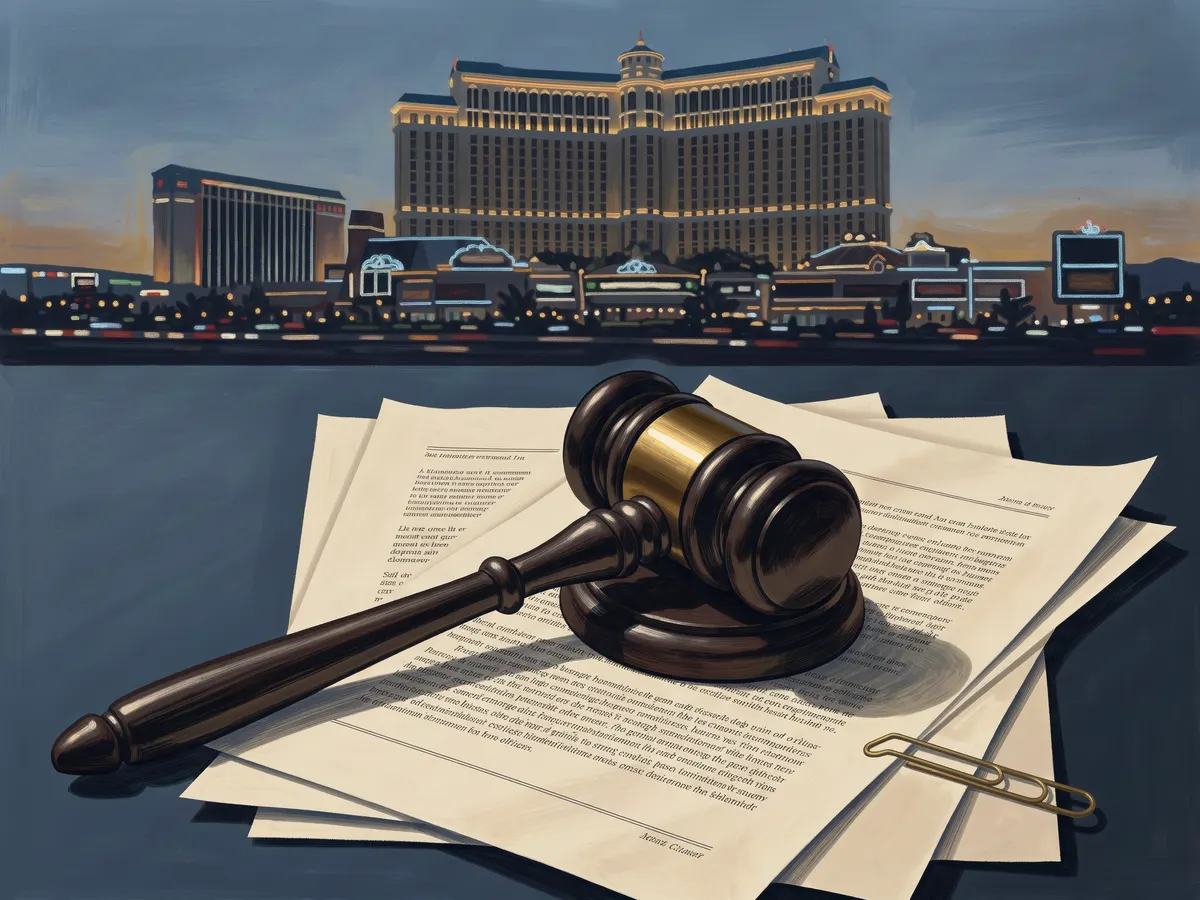
What the court actually decided
Picture the in-house legal team at a Las Vegas casino group staring at two unfair labor practice cases that have been grinding through a federal agency for years. You can argue the facts, witness by witness, in front of that agency. Or you can go to federal court and argue the agency itself shouldn’t exist in its current form. Red Rock Resorts picked the second route, and it just lost.
U.S. District Judge Anne Traum dismissed the Red Rock Resorts lawsuit that challenged the constitutionality of the National Labor Relations Board, a suit brought by Red Rock, its Station Casinos brand and a long list of affiliated casino entities. The goal was to halt two active NLRB proceedings over alleged unfair labor practices across the Station group. The dismissal was without prejudice, so the company can amend its complaint and try again, but the practical effect is clear: the labor cases keep moving, and the operator is back to defending them on the merits.
That’s the headline. The more interesting part is why the structural attack failed, and what it tells you about how a listed casino operator should pick its fights.
The two playbooks on the table
When a federal agency has you in its sights, you have two broad strategies, and they pull in different directions.
Playbook one: fight the allegations
You contest the facts. You argue the layoffs were driven by pandemic economics, not union animus. You put supervisors on the stand, you challenge the agency’s reading of the evidence, you appeal adverse findings through the normal channels. It’s slow, it’s expensive, and the record that comes out of it is public. But it’s the fight the system is built to hear, and every procedural step is one you know how to take.
Playbook two: attack the forum
You leave the allegations alone and argue the tribunal is unconstitutional. Red Rock went here. The company argued that federal law makes it improperly difficult for the President to remove NLRB board members and administrative law judges, which it said unconstitutionally limits executive authority. It also argued the agency wields an unconstitutional combination of powers by investigating and prosecuting alleged labor violations while also adjudicating them.
The appeal of this playbook is obvious. If it lands, you don’t win the case, you vaporise it. No findings, no bargaining order, no damages. It’s also become a familiar move across heavily regulated American industries over the past few years, which is part of why Red Rock’s filing didn’t come out of nowhere.
Why the forum attack fell short
Judge Traum didn’t engage in a sweeping defence of the agency. She did something more deflating for the plaintiff: she found Red Rock hadn’t shown the NLRB’s structure caused the company direct injury. Without that injury, the constitutional theory has nowhere to attach.
She also made the remedy problem explicit. Even if the removal restrictions on NLRB officials were found unconstitutional, that wouldn’t automatically invalidate rulings made by officials who were lawfully appointed in the first place. In other words, you could win the abstract argument and still be exactly where you started, with two labor cases waiting for you.
If you’re weighing a similar strategy, that’s the sentence worth pinning to the wall. A structural challenge needs a traceable harm and a remedy that actually changes your position. Red Rock’s filing, as the court saw it, had neither.
The record behind the constitutional argument
The constitutional fight is the newest layer. Underneath it is a dispute that started before the pandemic.
| Year | Development |
|---|---|
| 2018 | The NLRB opens the first of many proceedings against Station Casinos arising from unfair labor practice complaints. |
| 2019 | Workers at Red Rock Casino Resort vote 54% to 46% against union representation. |
| 2021 | The NLRB issues a comprehensive complaint alleging Station used pandemic-era workforce reductions and rehiring to weaken union support, including selective layoffs, recalls, rehires and transfers, encouragement of decertification efforts, and rewards for workers who opposed unionisation. Station denies the allegations and accuses the agency of biased treatment. |
| 2024 | The NLRB upholds findings that Red Rock violated federal labor law and orders the casino to recognise and bargain with the union, despite the 2019 election result. |
| October 2024 | Red Rock files its constitutional challenge to the NLRB while the labor proceedings remain active, seeking a preliminary injunction to stay them. |
| September 2025 | Judge Traum denies the injunction. Red Rock appeals to the Ninth Circuit. |
The 2019 vote matters more than the margin suggests. An NLRB administrative law judge later found Station had improperly influenced it by announcing improved employee benefits in the run-up to the election and threatening employees with the loss of those benefits if they voted for the union. That finding is what turned a narrow “no” into a bargaining order four years later: the agency concluded the election didn’t reflect an uncoerced choice.
So the company isn’t fighting a single complaint. It’s fighting a cumulative record that now stretches across three presidential administrations and a global health emergency, with the Culinary Union on the other side of it.
What this means for governance at a listed operator
Red Rock Resorts is the publicly traded Station Casinos parent, and that changes the calculus on a casino operator legal dispute in ways a private company wouldn’t feel as sharply.
Three pressure points stand out. First, duration. A bargaining order that’s upheld and then litigated over structural grounds doesn’t disappear from the risk section of your filings; it sits there as an open contingency with no clear end date. Second, labor cost certainty. If you ultimately have to recognise and bargain, your long-run wage and benefits trajectory in Las Vegas is negotiated rather than set, and that’s a planning input, not a footnote.
Third, and least discussed, is regulatory optics. Gaming licensees in Nevada and elsewhere operate under suitability standards where regulators look at a company’s broader compliance conduct, not just its gaming controls. A long-running federal finding that you broke labor law isn’t a gaming violation, but it’s the kind of thing that gets read as a signal about how a board supervises management. Nevada gaming litigation rarely stays in one lane.
For anyone building a view on casino corporate governance, the useful question isn’t whether Red Rock’s constitutional theory is right. It’s whether seven years of escalating proceedings, an adverse bargaining order and a failed collateral attack add up to a company managing a dispute or a company stuck in one.
The verdict: which playbook should have won
On the evidence so far, the merits route was always the stronger bet, and the structural attack has cost more than it has bought.
That’s not a judgment about whether the NLRB’s design is constitutionally sound. Courts elsewhere are still working through versions of that question, and the dismissal here was without prejudice precisely because the door wasn’t slammed shut. But Red Rock has now spent roughly a year in federal court, been refused an injunction, taken an appeal to the Ninth Circuit and had its complaint dismissed, all without touching a single factual allegation about the 2019 election or the pandemic-era layoffs. Meanwhile the 2024 bargaining order stands.
The practical lesson for operators watching this is unglamorous. Constitutional challenges to regulators are a lottery ticket, not a defence strategy. They work when you can point to a concrete injury the agency’s structure inflicted on you and a remedy that genuinely wipes the slate. Absent that, you’re paying litigation fees to delay a case you still have to answer, and building a public record of avoidance while you do it.
Red Rock can refile an amended complaint. The question its board faces is whether another round is worth it, or whether the cheaper path now runs through the bargaining table.
Frequently asked questions
Is the Red Rock Resorts lawsuit over?
Not permanently. Judge Traum dismissed it without prejudice, which means Red Rock can amend its complaint and refile rather than being barred from raising the claims again. What the ruling does end, for now, is the attempt to stop the NLRB proceedings through federal court.
What was Red Rock actually arguing?
That the NLRB’s structure is unconstitutional, on two main grounds: that removal protections for board members and administrative law judges improperly limit presidential authority, and that the agency unlawfully combines investigating, prosecuting and judging the same cases. It did not use the suit to contest the underlying labor allegations.
What is a bargaining order, and why does it apply after a “no” vote?
It’s an order requiring an employer to recognise and negotiate with a union. In 2024 the NLRB upheld findings that Red Rock had violated federal labor law around the 2019 election, in which workers voted 54% to 46% against representation, after an administrative law judge found the employer improperly influenced the vote through benefit announcements and threats. The agency’s position is that the result didn’t reflect a free choice.
Where can I read the agency’s side of the process?
The National Labor Relations Board publishes its procedures, case decisions and docket information directly, which is the cleanest source for how unfair labor practice complaints progress.