
Four days from firing to new CEO
Four days. That is the entire gap between the board resolution that ended two senior careers at Saracen Casino Resort and the announcement of a new Saracen Casino Resort CEO. On Thursday, Sept. 24, 2026, the Downstream Development Authority unanimously backed the terminations of General Manager Matt Harkness and Chief Market Officer Carlton Saffa. By the start of the following week, Rod Centers was in the chair, effective immediately.
Casino operators do not usually move that fast at the top. Executive searches at properties of this size routinely run months, with interim leadership holding the floor. The speed here tells you something: the board had already decided where it wanted to go before it decided who was leaving.
Here is how the sequence unfolded, which is worth laying out plainly because the compressed timeline is the story.
| Date | Event |
|---|---|
| November 2018 | Arkansas voters authorize a casino in Jefferson County |
| 2019 | Carlton Saffa joins the Saracen project |
| July 2026 | Quapaw Nation annual election: Jesse “Manz” McKibben elected chairman, Linda Valliere secretary-treasurer |
| Aug. 15, 2026 | Newly elected tribal officials sworn in |
| Thursday, Sept. 24, 2026 | Downstream Development Authority unanimously approves resolution supporting the terminations of Harkness and Saffa |
| Late September 2026 | Rod Centers named CEO, effective immediately |
Who Rod Centers is, and what the hire signals
Centers arrives from Seneca Gaming Corporation, where he was chief operating officer across the New York tribe’s three casinos: Seneca Niagara, Seneca Buffalo Creek, and Seneca Allegany. Before that he held leadership roles at Jack Entertainment, Penn Entertainment, and Caesars Entertainment.
That résumé is a deliberate choice, not a coincidence. A tribally owned commercial casino sits in an awkward middle ground: it answers to a sovereign nation’s business committee, but it competes in a state-licensed market against conventional corporate operators. Centers has worked both sides of that line, which is precisely the point Downstream Development Authority chairman Billy Shapp made in announcing the hire.
“Rod has run large properties for the biggest operators in the business and for a tribal nation, and he knows what it takes to win in a competitive market,” Shapp said. “The board is moving forward with new leadership and a new direction, and we chose the person who can take Saracen where it should go.”
Centers, for his part, framed it as continuity rather than a purge. “Saracen is one of the finest properties in the South, and I am honored to lead it,” he said. “This team helped build Saracen into what it is today, and this is the team that will carry it into the future. My job is to take it further, and we start today.” Read that carefully and you get the shape of the next few months: the executives are gone, the staff stays.
The side venture at the center of the firings
The resolution behind the terminations was specific. The Downstream Development Authority concluded that Harkness and Saffa had founded and marketed a gaming company called GamePhysics to third parties inside the Arkansas gaming industry. In other words, the issue was not performance, it was a conflict of interest: two of the people running the property were, in the board’s finding, selling to the property’s own competitive environment.
Saffa told Casino.org his dismissal came as a “total shock.” His history with the project runs deeper than most: he joined in 2019, within months of Arkansas voters authorizing a Jefferson County casino in the November 2018 election, and became the public face of Saracen through construction, opening, and expansion. The resolution was subsequently approved by the Quapaw Nation Business Committee, which made the firings official.
Anyone who follows gaming regulation will recognize why a side venture triggers this reaction rather than a reprimand. Casino licensing regimes vet the people in charge, not just the company, and suitability questions attach to executives personally. An operator that discovers senior management holds undisclosed commercial interests touching its own market has a strong incentive to act immediately and on the record, because the alternative is explaining the arrangement to regulators later.
The governance layer players never see
Saracen is a commercial casino owned by the Quapaw Nation of Oklahoma and operated through its Downstream Development Authority. That structure matters here. The board that fired two executives and hired a CEO in the same week is a tribal business arm, and tribal business arms answer to elected officials.
In the Quapaw Nation’s annual election in July 2026, Jesse “Manz” McKibben was elected chairman and Linda Valliere secretary-treasurer. They were sworn in on Aug. 15. Six weeks later, the casino’s two most visible executives were out and a new CEO was in. The tribe cited the conflict of interest, and that is the official reason on paper. But the proximity of a leadership change at the ownership level is the kind of context that experienced operators read as part of the picture rather than apart from it. New ownership leadership frequently means new expectations for the operating company, and the tribe’s own announcement of the appointment put the decision squarely with the board.
What a C-suite change actually changes on the floor
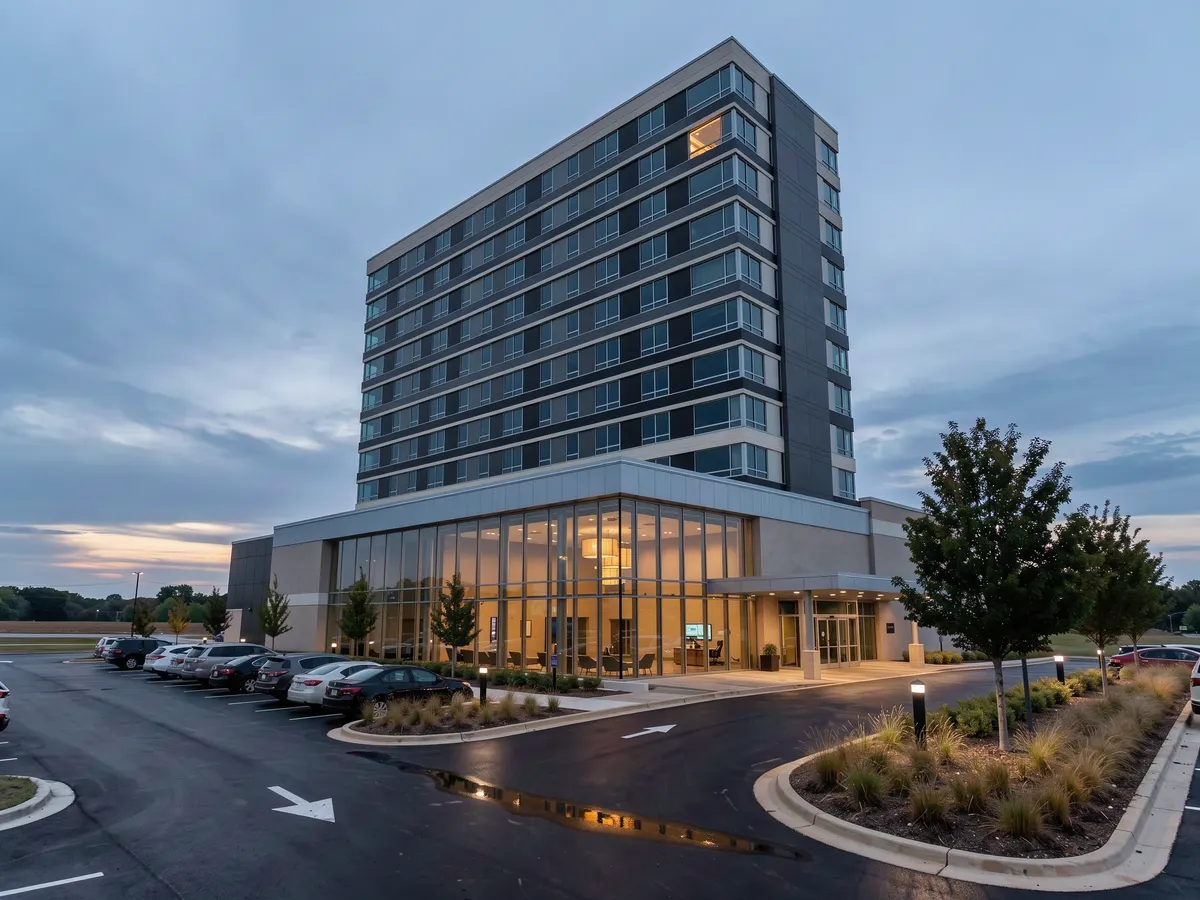
Saracen is not a small property. It runs more than 1,500 slot machines, 30 table games, a sportsbook, a 14-story, 318-room hotel and spa that opened in June 2026, and a 1,600-seat event center that books national touring acts. The hotel is barely a quarter through its first year, which is the worst possible moment to lose a general manager and a marketing chief at once.
For regular visitors, the practical effects of this kind of turnover tend to show up in a predictable order:
- Marketing and loyalty first. A chief marketing officer owns promotional calendars, mailers, tier benefits, and comp policy. New leadership almost always reprices that spend, which can mean different offers, different reinvestment levels, and a reshuffled player development team.
- Hosts and relationships second. Player development staff move with their bosses more often than any other department. Recognised faces at the player’s club desk are not guaranteed.
- Entertainment and food next. Event booking and restaurant programming run on long lead times, so changes here surface months later rather than weeks.
- The gaming floor last. Slot mix, table limits, and the sportsbook typically shift slowly, and the underlying math does not change at all. Game RTP and house edge are set by the games and their configuration, not by who runs the building.
That last point deserves emphasis, because leadership news invites the wrong conclusion. A new CEO can change promotions, comps, and how generous a reinvestment program feels. No executive changes the fact that every game on the floor carries a built-in house edge and loses money for players over time. If a reshuffled offer calendar pulls you in more often, that is a reason to set a deposit or loss limit before you go, not after.
What to watch next
Three things will tell you whether this settles quickly. First, whether Centers names a general manager and a marketing lead from inside the existing team, which would back up his “this is the team” language, or imports his own. Second, how Saracen’s promotional output changes heading into the hotel’s first full winter. Third, whether anything further emerges about GamePhysics, since conflict-of-interest findings involving licensed executives rarely end with a personnel resolution.
Shapp said the company’s commitment to Pine Bluff and Jefferson County is “stronger than ever,” and that “it starts with the people who work here and the community that has supported us since day one.” For a property that exists because local voters created it in 2018, that is the line the new CEO will be measured against.